
The Dark Truth: How Goth Music Genre Shaped Modern Rock [1979-2026]

Goth music emerged from the shadows of British post-punk in the late 1970s and revolutionized alternative music. The original sound featured dark arrangements, minor chords, and melancholic melodies. This distinctive style grew exponentially throughout the 1980s.
The origins of goth rock can be traced to several influential artists. Bauhaus stands as one of the founding bands of the movement. They released their iconic 10-minute single “Bela Lugosi’s Dead” in 1979. The Velvet Underground, The Doors, David Bowie, and The Sex Pistols established vital groundwork for what would become the gothic sound. Music critic Nick Kent noted this evolution in July 1978. He drew direct “parallels and comparisons” between Siouxsie and the Banshees and “gothic rock architects like the Doors and, of course, early Velvet Underground”.
London’s first dedicated goth club opened in 1982 at the Batcave venue. This marked the growing fascination with this eccentric subculture. Bands like Siouxsie and the Banshees, The Cure, and Sisters of Mercy expanded the movement throughout the decade. Each band added their unique elements to the evolving sound.
The Proto-Goth Era: Seeds of a Dark Sound
The goth music genre roots trace back to the experimental sounds of the 1960s and early 70s, long before black-clad figures gathered in London clubs. These early influences grew into what we now know as gothic rock and shaped generations of dark music.
The Doors and the birth of ‘Gothic Rock’ term
Music critic John Stickney first used the term “gothic rock” in October 1967 to describe The Doors in a review for The Williams Record. The band met journalists “in the gloomy vaulted wine cellar of the Delmonico hotel, the perfect room to honor the gothic rock of the Doors”. The Doors stood apart from the “pleasant, amusing hippies” of their time. They brought “violence” to their music and created dark atmospheres in their performances. Jim Morrison’s poetic romanticism and deep baritone vocals left a lasting mark on future goth vocalists. Simon Reynolds later described the typical goth vocal style as “deep, droning alloys of Jim Morrison and Leonard Cohen”.
Velvet Underground, Nico, and the melancholic esthetic
The Velvet Underground and German chanteuse Nico built the foundations of goth’s sonic and visual esthetic. Kurt Loder later described their song “All Tomorrow’s Parties” as a “mesmerizing gothic-rock masterpiece”. Nico’s 1968 album The Marble Index earned recognition from Alternative Press as “the first truly gothic album”. Bauhaus’s Peter Murphy echoed this sentiment, calling it “the first truly Gothic album”. Nico’s transformation after her Velvet Underground collaboration became the blueprint for future goth esthetics. She dyed her blonde hair black, wore all-black clothing, and her music delved into themes of death and darkness.
David Bowie and glam’s theatrical influence
David Bowie’s theatrical personas, especially during his Ziggy Stardust era, shaped goth’s dramatic presentation and gender-bending esthetic. Glam rock’s theatrical nature and openness to state-of-the-art ideas stayed alive in goth. Bowie’s influence reached beyond visual style. Joy Division drew inspiration from his album Low‘s layered, atmospheric sound. Goth artists like Siouxsie Sioux, Robert Smith, and Dave Vanian followed Bowie’s lead by creating dramatic stage personas that challenged gender norms.
The Doors’ brooding intensity, Velvet Underground/Nico’s somber esthetics, and Bowie’s theatrical innovation joined to create the foundation that would support goth rock’s haunting cathedral of sound.
The Rise of Goth Rock (1979–1985)
British post-punk experimentation gave birth to a darker musical movement that revolutionized alternative music. Musical elements gradually merged into what became known as the goth music genre.
Bauhaus and how ‘Bela Lugosi’s Dead’ changed everything
Bauhaus created history at Beck Studios on January 26, 1979. The band recorded “Bela Lugosi’s Dead” in a single take during a six-hour session, just six weeks after their formation. This nine-minute masterpiece waited almost three minutes before the vocals began and showcased a distinctive dub-influenced guitar sound created through partial barre chords. The haunting tribute to the legendary Dracula actor hit the stores in August 1979. Music historians now recognize it as the first true gothic rock record. Bassist David J later revealed, “We were very influenced by reggae, especially dub. Basically Bela was our interpretation of dub”.
Siouxsie and the Banshees and the Batcave scene
Siouxsie Sioux earned the title “godmother of goth” though she never embraced the label. London’s Soho district witnessed the birth of The Batcave club in 1982, which thrived until 1986. This iconic venue attracted stars like Robert Smith, Nick Cave, and Siouxsie herself. The club transcended typical nightlife by screening arthouse films and hosting cabaret nights. It even produced the compilation “Young Limbs and Numb Hymns”.
The Cure and the emotional depth of goth
The Cure’s journey began with their punk-inspired debut “Three Imaginary Boys” in 1979. Their sound evolved darker after touring with Siouxsie and the Banshees that same year, which inspired Robert Smith to write more reflective music [24, 25]. Smith crafted a trilogy of increasingly melancholic albums—”Seventeen Seconds” (1980), “Faith” (1981), and “Pornography” (1982). These records added emotional layers to goth music. Critics now hail “Pornography” as “the Cure’s gothic piece de resistance”.
Joy Division and the post-punk connection
Joy Division’s brief yet powerful existence left an indelible mark on gothic rock. Producer Martin Hannett described their signature style as “dancing music with Gothic overtones,” which predated the full goth movement. The band’s distinctive bass-driven sound became a cornerstone of early gothic rock, characterized by “high-pitched post-Joy Division basslines usurping the melodic role”.
Expansion and Diversification (1986–2005)
The goth music genre grew from underground roots and branched into many new styles between 1986 and 2005. Its dark influence spread worldwide and shaped various musical styles.
The Sisters of Mercy and the harder goth sound
The Sisters of Mercy started in Leeds in 1980 and created a harder-edged goth sound. They drew inspiration from unexpected artists like Leonard Cohen, Motörhead, and the Stooges. Their 1987 album “Floodland” brought booming production and pop appeal with hits like “This Corrosion” and “Lucretia, My Reflection”. The band achieved commercial success from the mid-1980s to early 1990s, joining other popular acts like Fields of the Nephilim and All About Eve.
American deathrock and Christian Death
On the other side of the Atlantic, American gothic rock emerged through California’s deathrock scene with bands like 45 Grave and Christian Death. Christian Death’s fierce opposition to religion made “Marilyn Manson look like Stryper”. The band’s direction changed when founder Rozz Williams left in 1985. Guitarist Valor Kand then led the group toward intellectual, political, and metal-influenced territory. Their music left a lasting mark and shaped “the sensibility of countless goth, metal, and even industrial acts that followed”.
Mall Goth and the MTV era
The 1990s saw the rise of “Mall Goth” after Hot Topic opened in a California garage in 1988. The store brought alternative fashion to suburban malls. Teenagers looking to rebel found this commercialized version of goth fashion easy to adopt. Mall Goths preferred nu-metal (Korn, Slipknot), industrial metal (Marilyn Manson, Nine Inch Nails), and later emo pop (My Chemical Romance) instead of traditional goth music. This mainstream version of goth became “an even bigger mainstream hype than 80s traditional goth due to its accessibility”.
Gothic metal and industrial fusion
Gothic metal appeared in the early 1990s in the United Kingdom as “a fusion genre combining the aggression of heavy metal with the dark atmospheres of gothic rock”. Bands like Paradise Lost, My Dying Bride, and Anathema from northern England led the way, along with Type O Negative from the United States. Norwegian band Theater of Tragedy created the unique “beauty and the beast” style, mixing harsh male vocals with clean female ones. Tristania and Within Temptation developed symphonic variants by the end of the decade.
Influence on 90s alternative and emo
Dave Simpson from The Guardian noted that “in the 90s, goths all but disappeared as dance music became the dominant youth cult”. The movement went underground and split into cyber goth, shock rock, industrial metal, and gothic metal. The 90s goth scene also shaped early 2000s emo-rock bands like My Chemical Romance, Panic! At The Disco, and Fall Out Boy. Spin magazine saw Marilyn Manson as a “goth-shock icon” who mixed “atmosphere from goth and disco” with “industrial sound”, connecting various dark music subcultures.
Goth Rock’s Legacy in Modern Music (2006–2025)
Digital platforms have given new life to the goth music genre since 2006. The genre’s reach now extends well beyond its traditional boundaries.
Nu-goth and the digital revival
Nu-goth emerged as a digital-age revival around 2010. This modern take blends traditional goth elements with electronic music and witch house esthetics. Artists like Zola Jesus, Chelsea Wolfe, and Azar Swan represent this fresh incarnation. The movement gained popularity online rather than through traditional club scenes. Social media platforms, especially Tumblr and Instagram, helped shape this esthetic-focused movement.
Modern bands carrying the torch
Lebanon Hanover, Boy Harsher, Cold Cave, and She Past Away now carry forward goth’s traditions while adding fresh elements. These bands mix post-punk foundations with synth textures and minimalist approaches. Their music appeals to longtime fans and younger audiences who are just discovering the genre.
Goth’s influence on fashion and pop culture
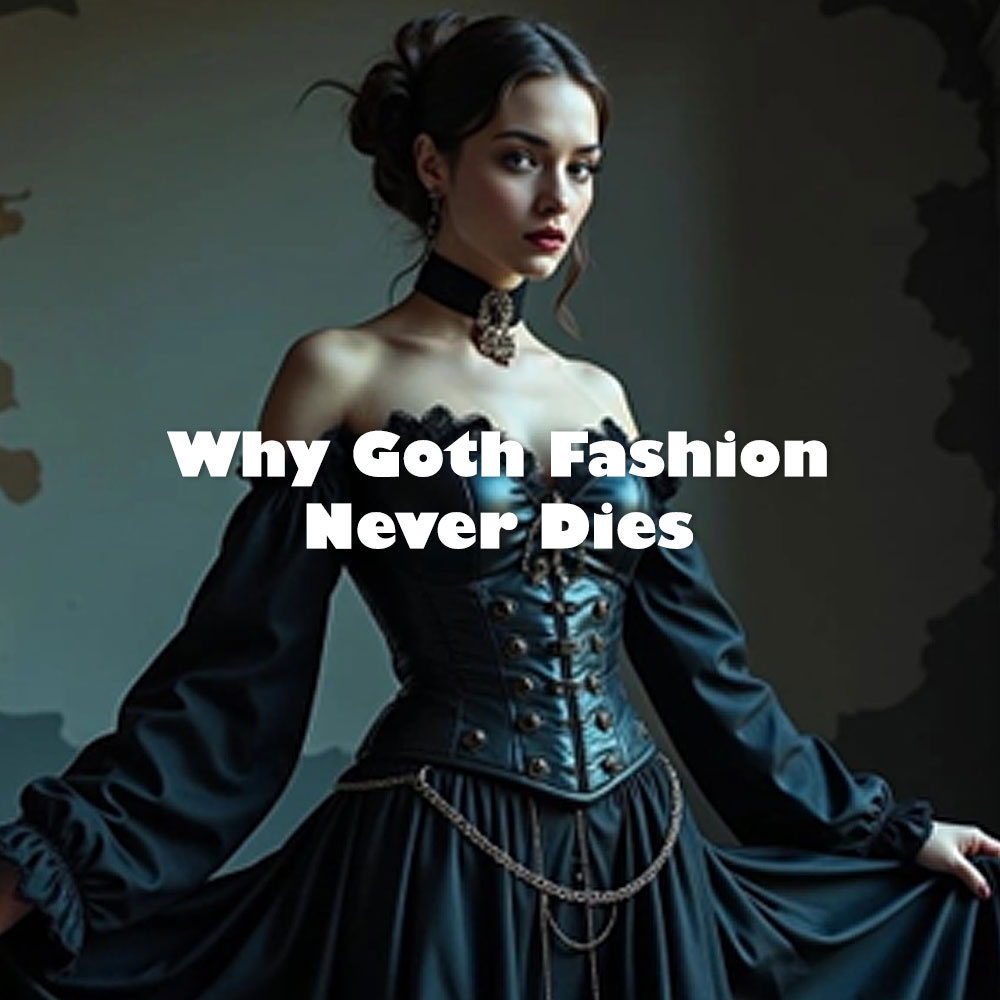
Gothic esthetics now pervade mainstream fashion houses and celebrity wardrobes. Alexander McQueen, Rick Owens, and Gareth Pugh have brought gothic elements into their high-fashion collections. Pop stars like Billie Eilish, Halsey, and Lorde embrace goth style elements. They introduce these esthetics to mainstream audiences in subtle yet recognizable ways.
Streaming platforms and goth’s global reach
Digital streaming helps goth music surpass geographical limitations. This creates unexpected pockets of popularity worldwide. Turkish band She Past Away, to cite an instance, has strong followings in Latin America and Eastern Europe. Streaming algorithms create new paths for listeners to find classic goth acts. This connects generations of fans across the digital world.
Conclusion
Goth’s trip from its shadowy post-punk roots to a global cultural force spans four decades of musical development. The genre has shown remarkable resilience and adapted to new musical scenes while staying true to its dark core of reflection and theatrical expression.
Pioneer bands like Bauhaus, Siouxsie and the Banshees, and The Cure shaped goth rock’s signature sound. They built on The Doors’, Velvet Underground’s, and David Bowie’s foundations to create something unique – a genre that embraced darkness instead of running from it.
Goth thrived and branched out through the 1980s and 1990s. Sisters of Mercy added harder elements to the sound, and American deathrock brought its own regional twist. Gothic metal emerged naturally and showed how well goth mixed with other musical styles. “Mall Goth” brought the look to mainstream youth culture, which both watered down and spread goth’s influence.
The digital age altered the map of how goth music reaches its audience. Nu-goth artists built their following on social media rather than in traditional club scenes. Streaming platforms connected classic goth bands with new fans worldwide. Modern bands like Lebanon Hanover, Twin Tribes and She Past Away now lead the way. They honor traditions yet challenge creative boundaries.
Goth has exceeded pure musical expression to leave its mark on fashion, film, literature, and visual arts. This cultural impact means that whatever mainstream attention it gets, goth will continue its dark development well past 2025. People will always wrestle with mortality, alienation, and beauty in darkness, and goth music will be there with its haunting soundtrack.
FAQs
Q1. When did goth music originate? Goth music emerged as a distinct genre in the late 1970s, evolving from British post-punk. However, it wasn’t until the early 1980s that it became associated with a specific youth subculture and gained wider recognition.
Q2. Who are considered the pioneers of goth rock? Bands like Bauhaus, Siouxsie and the Banshees, and The Cure are widely regarded as pioneers of goth rock. They built upon foundations laid by earlier influential artists such as The Doors, Velvet Underground, and David Bowie to create the distinctive goth sound.
Q3. How has goth music evolved over the years? Goth music has diversified significantly since its inception. It has spawned subgenres like gothic metal, incorporated industrial elements, and more recently embraced electronic influences in the form of nu-goth. The genre has also had a lasting impact on fashion, film, and other forms of art.
Q4. What characterizes the goth music sound? Goth music is typically characterized by dark arrangements, minor chords, and melancholic melodies. It often features deep, droning vocals, prominent bass lines, and atmospheric guitar work. Lyrically, it tends to explore themes of mortality, alienation, and dark romanticism.
Q5. How has digital technology impacted the goth music scene? Digital platforms and streaming services have greatly expanded goth music’s reach, allowing it to transcend geographical limitations. Social media has facilitated the growth of nu-goth, while streaming algorithms have connected new generations with classic goth acts, ensuring the genre’s continued evolution and global popularity.
References
[1] – https://missmephistopheles.wordpress.com/2018/07/20/where-the-hell-did-goth-music-come-from-and-what-the-hell-is-it-the-history-of-goth-rock/
[2] – https://darkwaveradio.net/gothic-rock/
[3] – https://www.factinate.com/people/facts-Nico
[4] – https://www.dazeddigital.com/artsandculture/article/27034/1/was-nico-the-first-ever-goth-girl
[5] – https://pitchfork.com/features/lists-and-guides/the-story-of-goth-in-33-songs/
[6] – https://blog.roughtrade.com/gb/rough-trade-essential-goth-before-goth/
[7] – https://theconversation.com/knowledge-comes-from-deaths-release-blackstar-recalls-david-bowies-influence-on-goth-53145
[8] – https://en.wikipedia.org/wiki/Bela_Lugosi%27s_Dead
[9] – https://www.dazeddigital.com/fashion/article/24865/1/siouxsie-sioux-the-batcave-and-the-legacy-of-80s-goth
[10] – https://en.wikipedia.org/wiki/Gothic_rock
[11] – https://en.wikipedia.org/wiki/Joy_Division
[12] – https://www.vaultofthoughts.com/2022/01/28/the-sisters-of-mercy/
[13] – https://officialchristiandeath.com/
[14] – https://www.season-of-mist.com/bands/christian-death/
[15] – https://baremagazine.org/Siouxsie-Who-Goth-Mall-Goth-and-The-System-of-Subculture
[16] – https://esthetics.fandom.com/wiki/Mallgoth
[17] – https://en.wikipedia.org/wiki/Gothic_metal
[18] – https://en.wikipedia.org/wiki/Goth_subculture